10 Oct 2026
Bonus Structures and Their Role in Game Selection Trends Within Regulated Online Platforms
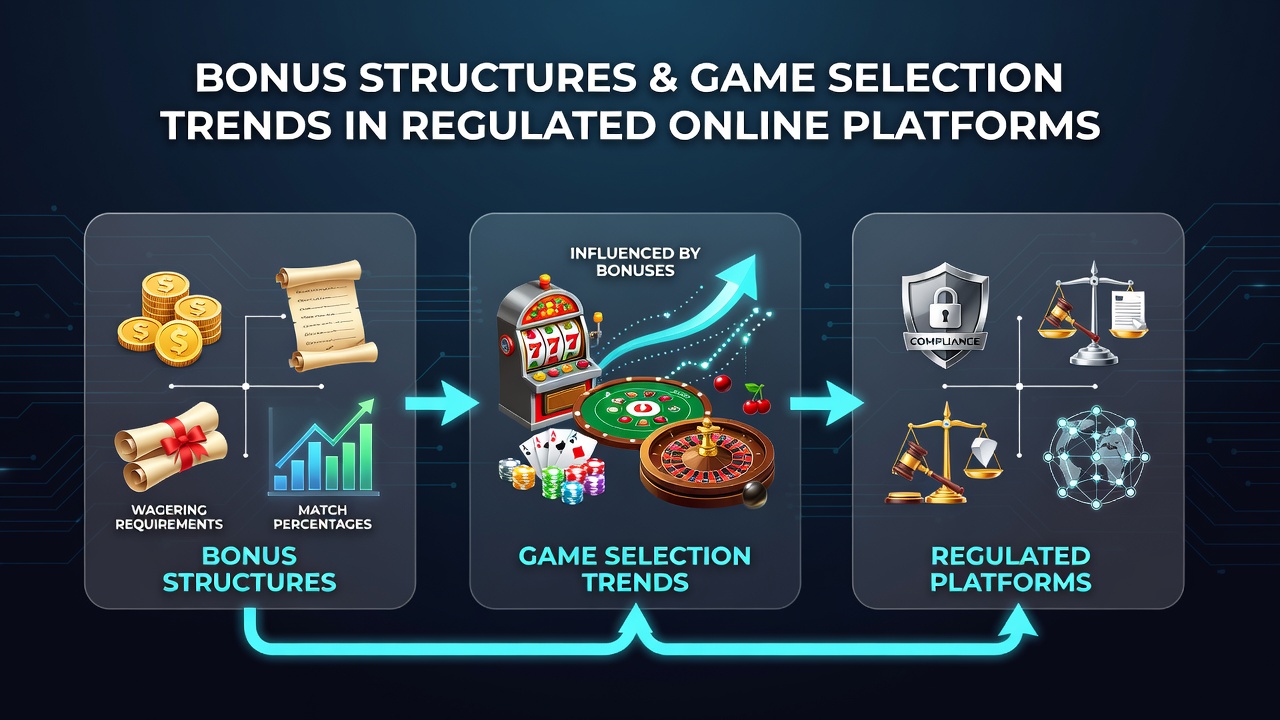
Regulated online platforms deploy bonus structures that shape how players choose games, with deposit matches, free spins, and loyalty rewards directing attention toward specific titles and formats. These incentives appear across markets in North America, Europe, and Asia-Pacific, where operators tie promotions to game categories in order to meet regulatory compliance while guiding user behavior.
Common Bonus Structures in Regulated Markets
Operators structure bonuses as percentage-based deposit matches that often require playthrough on designated games, free spin packages limited to slot titles, and cashback programs that return a portion of losses across multiple categories. Data from October 2026 indicates that platforms in multiple jurisdictions adjusted these offerings following updates to responsible gambling standards, with many tying eligibility to verified accounts and age checks.
Free spin bonuses frequently restrict activation to progressive slot games or themed video slots, which leads players to select those options over table games or live dealer experiences. Meanwhile, reload bonuses and VIP tier rewards sometimes apply broader conditions, allowing use on blackjack, roulette, or poker variants, although operators still favor volume-driven slots for meeting wagering targets.
How Bonuses Influence Game Selection Patterns
Research from the American Gaming Association shows that players on regulated sites gravitate toward games featured in active promotions, with slot selections rising during periods when free spin offers dominate marketing campaigns. This pattern holds because bonus terms often include game weighting, where slots contribute 100 percent toward playthrough requirements while table games contribute far less.
Platforms in Canada and Australia report similar trends, where seasonal bonus campaigns coincide with spikes in specific game categories. Observers note that loyalty programs rewarding consistent play on a narrow set of titles encourage repeat selection of those games, creating measurable shifts in overall platform traffic.

Regional Variations and Regulatory Context
In the United States, state-level regulations in places like New Jersey and Pennsylvania require clear disclosure of bonus terms, which affects how operators present game restrictions to users. Those who've examined platform data find that clearer rules correlate with higher engagement on promoted titles, since players understand the conditions before committing funds.
European markets outside the UK apply their own frameworks through bodies such as the Malta Gaming Authority, where bonus structures must align with consumer protection guidelines. Reports compiled in October 2026 highlighted that platforms operating under these rules increasingly use bonus expiration dates and game-specific caps to steer selections toward lower-volatility options during certain promotional windows.
Australian operators follow guidelines from the Australian Communications and Media Authority, and available figures reveal that bonus-linked game bundles often emphasize locally themed slots to maintain compliance with content standards. This approach results in measurable upticks in selections of those particular games during active campaign periods.
Data Trends Observed in 2026
Industry reports compiled through the third quarter of 2026 demonstrate that bonus-driven game selection accounts for a significant share of total spins and hands played on regulated platforms. When operators introduce tiered bonuses that escalate rewards for continued play on the same category, players tend to consolidate activity rather than explore new titles.
What's notable is how these structures interact with responsible gambling tools, since many jurisdictions require operators to cap bonus values and display remaining wagering requirements in real time. Such features help players track progress across chosen games without altering the underlying incentive to focus selections on qualifying titles.
Conclusion
Bonus structures continue to function as key mechanisms that shape game selection on regulated online platforms, with operators balancing commercial goals against compliance obligations across different regions. As data from October 2026 and earlier periods indicates, the design of these incentives directly correlates with observed patterns in player activity, particularly when weighting rules and eligibility conditions favor certain game types. Platforms that adapt these structures in response to regulatory updates maintain their ability to influence trends while operating within established legal frameworks.